
Maureen and Iain Manson
Jim and Maureen Manson lived in Livingstone Place, Lockerbie, on December 21, 1988. Their three children, Iain, Jim and Morag, were due to join them for Christmas.
Jim Manson was born in Glasgow on October 7, 1930. Secretary of the Moffat Mountain Rescue Team, he deployed with the team and was involved in the search and recovery operation until Boxing Day 1988. When these operations wound down, Jim continued to support relatives of the victims, taking several of them to the areas where their loved ones were found. Jim had a walking column in the Dumfries and Galloway Standard and was the author of Walks in the Moffat Hills and the Lowthers (1998) and Cry the Curlew (2024), which was published posthumously following his death on December 7, 2016.
Maureen Manson was born on September 17, 1934, and lives in Lockerbie. As well as supporting her husband and sons during their difficult duties with the mountain rescue team, she volunteered to support the search and recovery operations during the months following the bombing.
Their son Iain was born and grew up in Lockerbie. A keen cyclist and runner who has raised significant money for charity, he also played for Mid-Annandale Football Club. Iain was living in Leicester at the time of the bombing.
- First Responder
- Survivor
A Very Different Christmas Together

Mountain rescue
1/21/1970-12/18/1998
Jim Manson had a love of the outdoors, which led him to publish a guidebook of the local hills, Walks in the Moffat Hills and the Lowthers, and to join the Moffat Mountain Rescue Team. On the night of the bombing, the team was called out to volunteer.


Jim Manson's Walks in the Moffat Hills and the Lowthers was published by Cameron & Hollis in 1998.
The day of the attack
12/21/1988
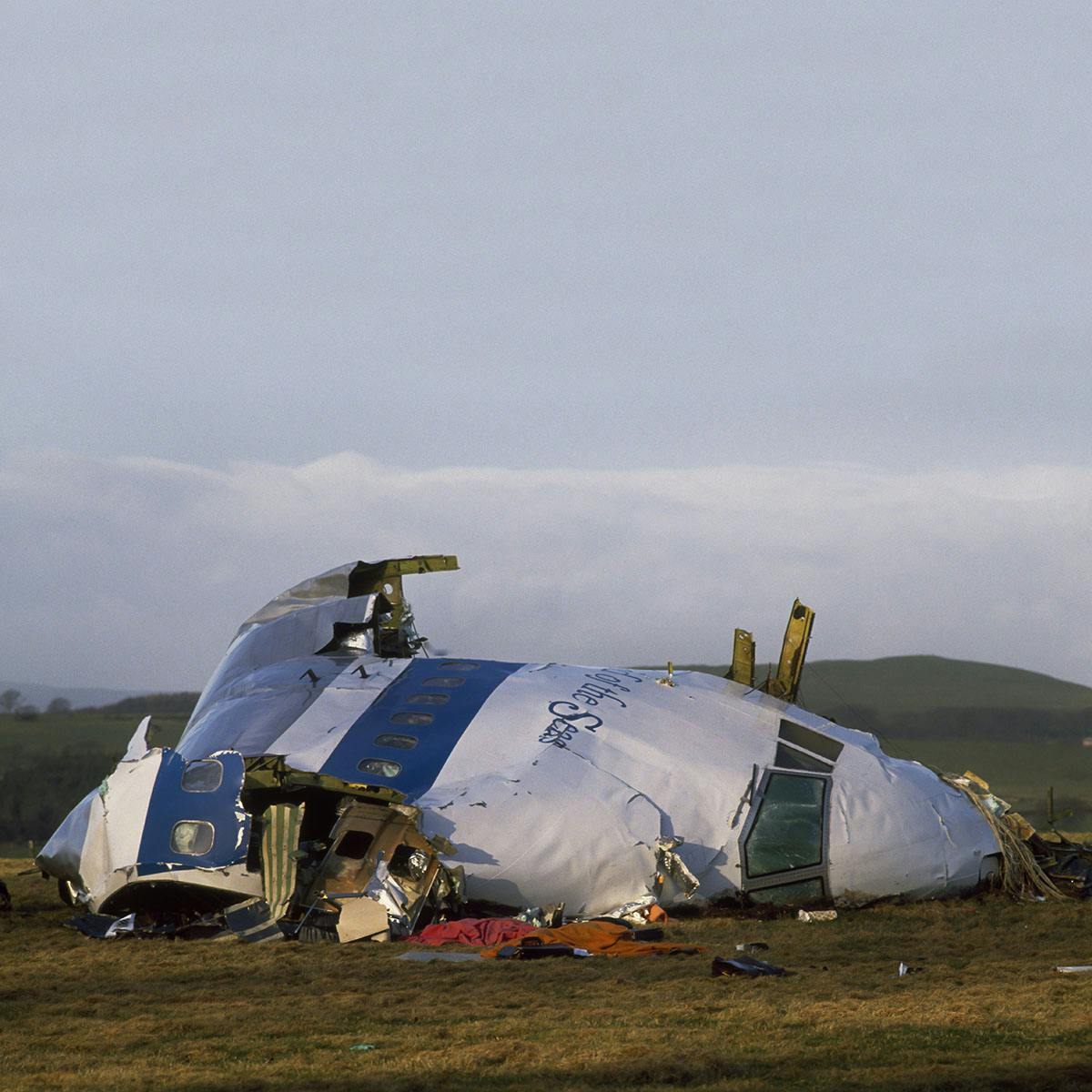
Jim and Maureen were at home on the night of December 21, washing the dishes after supper, when they heard an explosion and rushed outside to find out what was going on. Shortly afterwards, Jim was called away to join the Moffat Mountain Rescue Team to search the crash site.


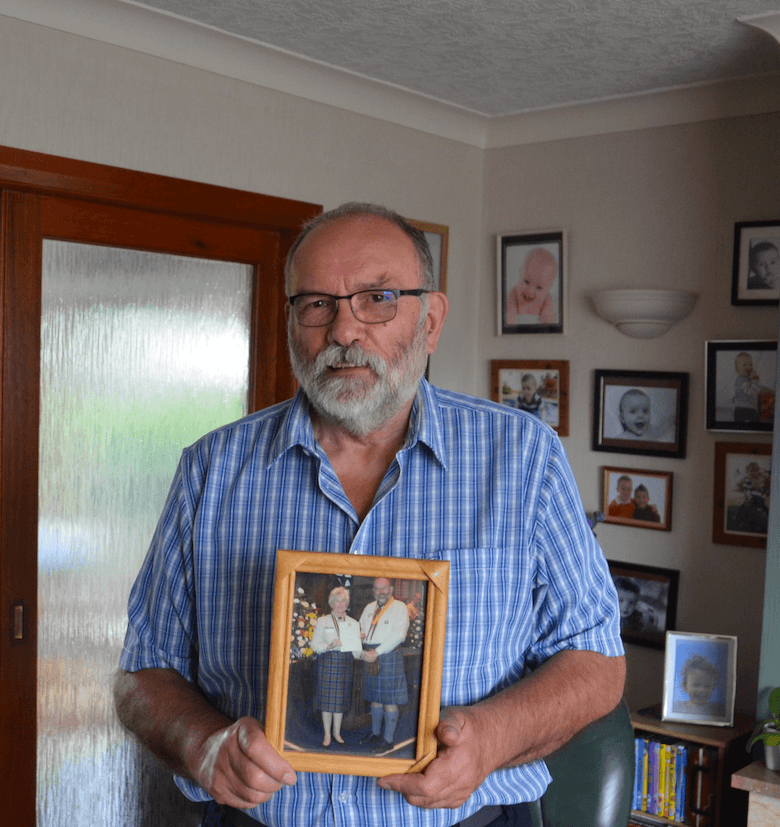
Jim Manson (top right) was one of several people interviewed and photographed for an article in The Guardian published to commemorate the 10th anniversary of the disaster. In the piece, Jim describes what he experienced and saw as parts of the plane crashed and during early rescue and recovery efforts.
"I thought it was the gas boiler," he said. "The the house started shaking." In the distance there was a "sheet of flame."
Jim's team went to Tundergarth looking for survivors. "We went up a hill and realised we would be looking only for bodies. One chap was still sitting upright in a seat. It was so unreal...."
Maureen found herself alone at home with no telephone connection. She worried for her husband, Jim, who didn’t come home that night.
Iain saw the news of the bombing and decided to drive to Lockerbie straight away to make sure his parents were safe and to help out the Mountain Rescue Team with the search operation.
The days following the attack
12/22/1988-5/24/1998
Iain’s father Jim returned around breakfast time on the 22nd, having been out all night. He was keen to head back out again to help and enlisted Iain and his brother, also called Jim, to help.
Iain remembers having conflicting feelings about being beside his father and brother searching in the hills amid the horrific circumstances.
Iain remembers a spirit of camaraderie among the volunteers and particularly between the different mountain rescue teams.
Iain learned from his dad that most of the bodies were discovered on the first night so that second night was focused primarily on what could be found in the debris.
The Moffat Mountain Rescue Team met on December 22nd at Tundergarth, where the nose cone was located, before going up to Burnswark. Iain remembers finding bits of steel that belonged to the aircraft’s seats and some items of clothing belonging to the victims. The mountain rescue teams were stood down on Christmas Eve.
The family were all together for Christmas, but it was a sombre day. All they could think about was the disaster.
After Christmas, Maureen volunteered at the old primary school where she served coffee to the police teams investigating the sites. She helped out at the school until the following spring.
Long-term effects of the attack
5/1/1989-7/24/2026
Jim found a number of the victims, including Gwyneth Owen, a young Welsh mother who was on the airplane with her baby daughter. He also found Maria Nieves de Larracoechea, a Spanish flight attendant. Following the disaster Jim remained in communication with Gwyneth’s mother and Maria’s sister and helped them visit Lockerbie.
Despite the harrowing things that he encountered, Jim was never offered therapy. However, a number of the members of the mountain rescue teams met in the Lake District to talk about what they had been through. Iain noticed that the disaster affected his father, making him more tense, but that his connection with the victims’ families and his friends in mountain rescue provided him some support.
Maureen and Iain explain how much Jim loved to be outdoors, preferably in the hills or in his garden that he planted with Maureen. Being in nature was a coping mechanism for Jim, and his love for nature was passed down to Iain.
Maureen and Iain discuss how they tried to move on from the event and how media coverage impacted the process. Ultimately, Maureen explained, she was trying to keep the family going.
The trials
5/3/2000-7/24/2026
Iain recalls how he felt about the trial of Al-Megrahi and Fhimah. He was pleased to see some form of justice but explains the frustration that resulted from thinking the men who were on trial were not the leaders of the operation.
Efforts to memorialize the victims
1/1/2026
Iain is impressed with the efforts to make the old Dryfesdale Church in Lockerbie into a museum and memorial site, trying to help define Lockerbie not just as the site of a disaster, but as a thriving community.
He explains that if we can teach the lessons from the Pan Am 103 Lockerbie disaster, then perhaps we can prevent something like this from happening in the future.
Related Stories

My Friend Jewel

Dealing with Things That Have Haunted Me

Bringing Them Home from the Hills: Braemar Mountain Rescue Team and Grampian Police
Your story is our history
Share your unique story of how the December 21, 1988, terrorist attack affected your life. Preserve your memories and legacy while helping to create the most extensive digital library of personal stories about the Pan Am 103 attack.
Explore Further
Authors & Artists
Aviation Safety & Security
Community Partners

Flyers' Rights vs. Business as Usual
Historical Archives: Curated Collections
Justice & Accountability
Legacy Story Library
Living Memorial
Lockerbie: A Lesson in Humanity
Memorial Sites & Monuments
Pan Am Employees
Remembrance Programs & Publications
Syracuse University
The Attack
Volunteer

Good Endures
We vigorously advocate the quest for truth about this terrorist attack against America and tangible justice for the 270 murdered victims.