
Malcolm Ashpool
In 1988, Malcolm Ashpool worked for the Meteorological Office (commonly referred to as the Met Office), a government agency with strong connections to the Ministry of Defence (MOD) and the Civil Aviation Authority (CAA) which provides the UK’s national weather and climate service. While non-military forecasting was centralised to its headquarters in the early 2000’s, the Met Office still has a presence at many military sites around the UK. It is also a commercial organisation and the MOD and CAA pay for its services.
- Other
Threatening Weather: The Meteorological Office and Pan Am Flight 103

Meteorological Services – Background
1/1/1988-5/20/2026
In 1988, Met Office forecasters and observers were based on-site at Royal Air Force (RAF) and British Army bases. The Royal Navy had their own forecasters and observers, who were uniformed personnel rather than civilians. Civil aviation forecasting was provided by Met Office HQ for general aviation forecast charts covering Europe and beyond, whilst London, Manchester and Glasgow weather centres provided more detailed forecasts for all civil aviation within the UK. A few airfields had an observer on site (such as Blackpool, Manchester and Birmingham) but, in general, the observations were provided by the local air traffic controllers (who were fully trained and certified).
The forecasts provided by the Weather Centres were specifically for the civil airfields. Local area forecasts (LAFs) were issued at six hourly intervals, valid for up to nine hours whilst the airfield was open, so as to give operations and air traffic a forecast of what to expect throughout that period. This was typically within a 20 km radius of the airfield with winds forecast for up to, say, 20,000 ft, depending on the airfield requirements.
Landing forecasts or Terminal Airfield Forecasts (TAFs) were issued every three hours, spanning the following nine hours and included any significant variations with times during the validity. They covered wind, visibility, weather, cloud type and height of cloud base. Some larger airfields e.g. Manchester, Heathrow and Birmingham, required TAFs for 18 hours ahead, issued every 6 hours. These were for the long-haul flights. Amendments were issued under certain criteria when required for all forecasts.
The day of the attack
12/21/1988
On December 21, 1988, I arrived at Manchester Weather Centre at 6:45 pm for my aviation night shift that would go through until 8:00 am the following morning. I was briefed by the outgoing forecaster on the days’ weather and the forecast for the coming night and following day, after which as routine I would analyse the 1800 chart and check my routine for the shift. Most aviation shifts were routine, with rarely any extra work, a relatively simple start to the night but getting busier after 2:00 am.
The airfields for which I had responsibility were Manchester, Liverpool, Blackpool, Carlisle, Leeds/Bradford, Teesside and Newcastle. Of these, Manchester, Liverpool and Newcastle would remain open throughout the night, while others would close early evening (approx. 5:00 pm) and reopen around 6:00 am on December 22. As such, my primary task would be to prepare the nine-hour TAFs (valid 9:00 pm to 6:00 am) for Manchester, Liverpool and Newcastle ready for transmission by 8:00 pm. This was done on a computer and the TAFs themselves would appear on the CAA’s OPMET system, to be distributed around the world.
The observer at Manchester Airport would provide an observation at 20 minutes past and 10 minutes the hour every hour. I would add to that a short TREND, which was a forecast of any significant change of current conditions possible or expected during the next two hours. His first call was at 7:20 pm and the first thing he asked was whether we had received any phone calls from the public asking about an earthquake? I said I didn’t think so and checked with the other duty staff. They said no. The observer elaborated, saying that he had just had a strange call from the British Geological Survey observatory at Eskdalemuir in Dumfriesshire, reporting that their seismometer had picked up something very shallow around 7:00 pm. I confirmed that we hadn’t received any such reports of our own but would let him know if we did.
Shortly afterwards, I received a call from one of the Royal Navy bases in the south, which took me by surprise as we very rarely heard from them. After all these years, I can’t recall with 100% accuracy which base it was.
There then followed a slightly strange conversation with the Royal Navy (RN), which went something like this:
RN: “Are you responsible for Carlisle TAFs?"
Me: “Yes”
RN: “Could you let me have the latest TAF, then, please?"
Me: “Carlisle has already closed and won't be open until 0600 tomorrow.”
RN: “But I need one urgently.”
Me: “I can’t issue a TAF for an airfield that is closed. It’s against CAA rules. Why the urgency?"
RN: “I can’t tell you, but I need one urgently. The authorities are on their way to open up the airfield.”
Me: “I still can’t under CAA rules unless you let me know something. I don’t need to know all the details, but just something to justify it. We are all part of the MOD here and have the basic security clearance.”
RN: (after being quiet for a while, during which time I could hear him speaking to a colleague) “There has been a major incident in the Scottish Borders, and we need to fly emergency equipment and personnel into the area as soon as possible”.
Me: “OK, I still can’t issue a TAF until I get two consecutive observations from the airfield, as per CAA rules. However, they do have an automatic weather station on the airfield, and I can use that as one of the observations if necessary. Therefore, as soon as they open up the airfield and carry out an observation, I can issue a TAF for you. Meanwhile, I can issue you with a short Local Area Forecast, which will cover a five-kilometre radius of the airfield for the next two hours. If you give me your (ICAO) address, I can deal with it now".
RN: “Yes, please.” (He then proceeded to give me the air traffic, operations and Met Office ICAO addresses for his base).
I sent off the short LAF and then, about 30 minutes later, sent a TAF for Carlisle on receipt of the airfields first observation. I then provided Carlise with their normal LAF to cover the night (usually not issued until 6:00 am). Although I still didn’t know the problem, I thought that the Royal Navy might also like a copy of the local Carlise forecast and sent it onto them, as they were obviously coordinating the emergency response.
Five minutes later, I received a second call from the Royal Navy. Again, an approximation of this is as follows:
RN: “Thanks for all the information. Would it be possible to add a couple more addresses”? (An easy task for me. This saved them having to send it on themselves at what must have been a very busy time.)
Me: “Sure.” (I seem to remember the addresses were British Army bases.)
RN: “Are you able to provide a similar local area forecast for an area near the Scottish Borders?"
Me: “Sure. What radius and winds to what height?”
RN: “40 kilometres and 35,000 feet.”
Me: “I’ll get it to you as soon as I can.”
By this time, I was also running into my routine work, but the forecast was soon prepared and sent.
It was shortly after that that the observer at Manchester Airport rang to give me the grave news about Pan Am flight 103 that he had heard from their Air Traffic and Operations.
Later that evening, I received a third and final call from the Royal Navy to find out whether it would be possible for these forecasts to be issued regularly over the next few days. I confirmed that I would be able to set that up. Luckily, I just so happened to be the IT officer at the weather centre, so I was able to set up the menu and template on the computer, which could then be used—and was used—for the next week or so, with four issues each day. I also wrote out a staff instruction for my co-workers so they understood the reason for the new work and left this for the manager to issue when he arrived in the morning.
In the Pan Am flight 103 story, I suppose interactions such as these are rarely spoken about. The Royal Navy guy would have been busy interacting with various groups and stations, organising military personnel from the tri-service, transport up to Carlisle, etc. I was pleased I was there and was able to help him, even though just doing my job. We were two small cogs in the emergency machine, but what would it have been like without us? The Weather Centre staff continued with the forecasts for a few weeks as requested.
Reflections
3/11/2026-3/11/2026
While there has been a lot of coverage on TV over the years about the Lockerbie disaster, it quite rightly talks of the aircraft, the explosion, the victims, the carnage in Lockerbie itself and then onto the search and rescue operation, which went on for many days and weeks afterwards.
The one thing that I always thought worthy of mention, but never really has been, was what went on in the immediate aftermath from when the aircraft hit the ground to when the main searches started at first light on 22 December. How did the military get there so quickly, the logistics of it all, the work put in by a handful of unknown people to make it happen? I was proud to be a small part of that group of people.
Interestingly, since 1988, I have discovered several connections to the bombing. The husband of an old school friend of mine, now living in Dumfries, was one of the first police officers who scoured the countryside around Lockerbie.
My current next-door neighbour was in the RAF and was also deployed with the search parties.
My brother in law's grandmother was a resident of Lockerbie at the time. He remembers that, as a young child, they were unable to contact her as the phone lines were down, so with his parents they drove up there from Bedfordshire the following day. Thankfully she was unharmed.
Even now, living in Lincolnshire means that I am only 15 miles from the salvage yard where much of the wreckage of Pan Am flight 103 is still stored. I drive past regularly and it always brings back many memories.
The memory of that night has never left me and, one day soon, I will visit Lockerbie to pay my respects.
Related Stories

My Friend Jewel

Dealing with Things That Have Haunted Me

Bringing Them Home from the Hills: Braemar Mountain Rescue Team and Grampian Police
Your story is our history
Share your unique story of how the December 21, 1988, terrorist attack affected your life. Preserve your memories and legacy while helping to create the most extensive digital library of personal stories about the Pan Am 103 attack.
Explore Further
Authors & Artists
Aviation Safety & Security
Community Partners
Flyers' Rights vs. Business as Usual
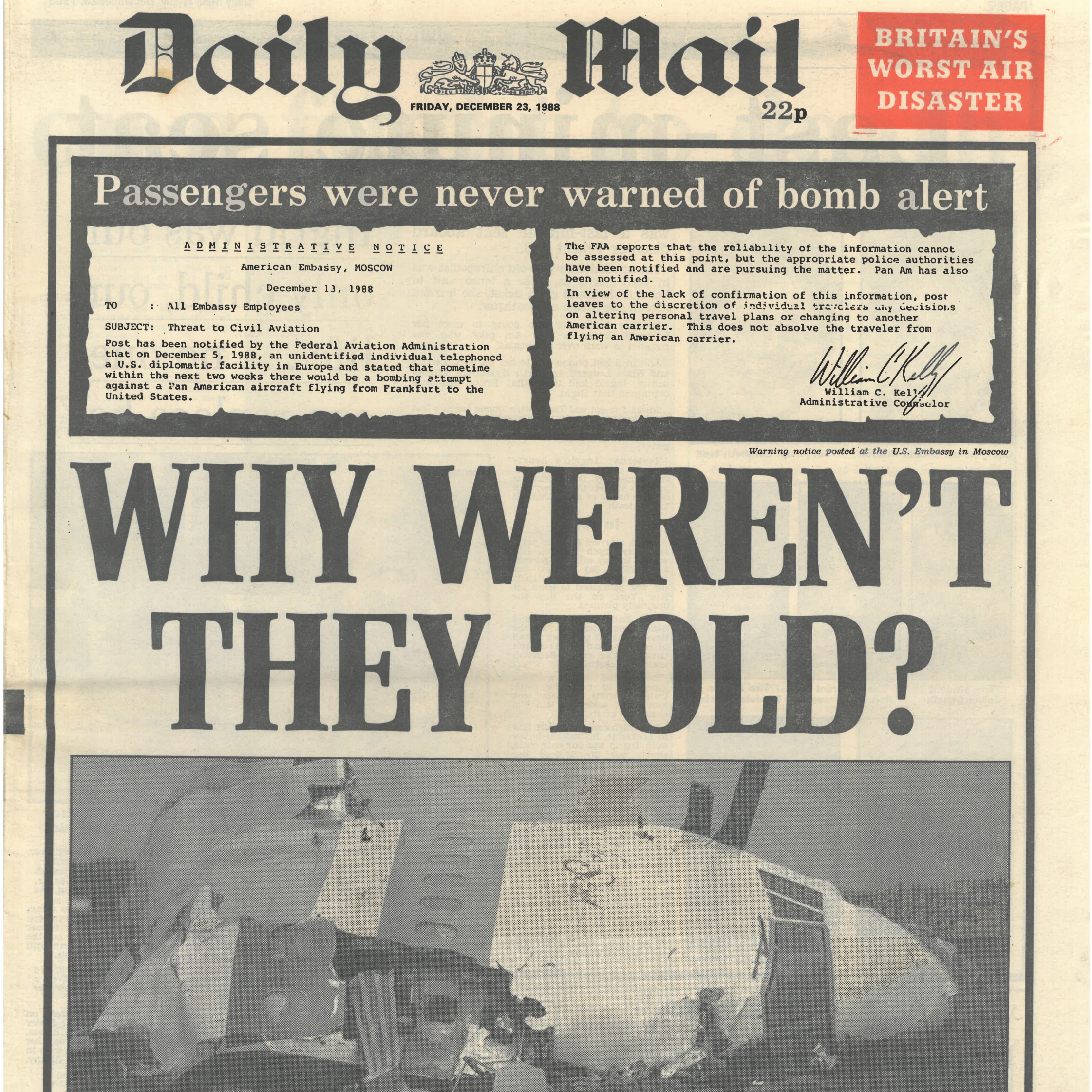
Historical Archives: Curated Collections
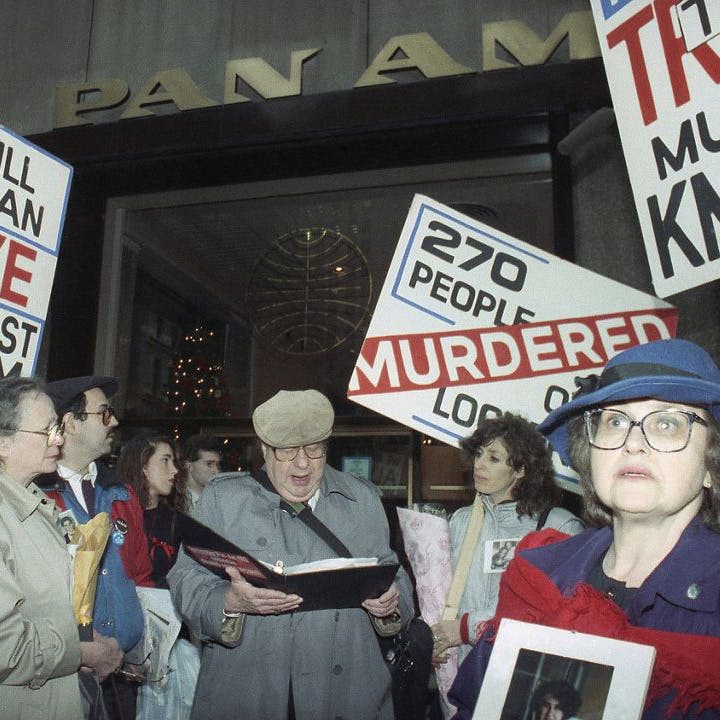
Justice & Accountability
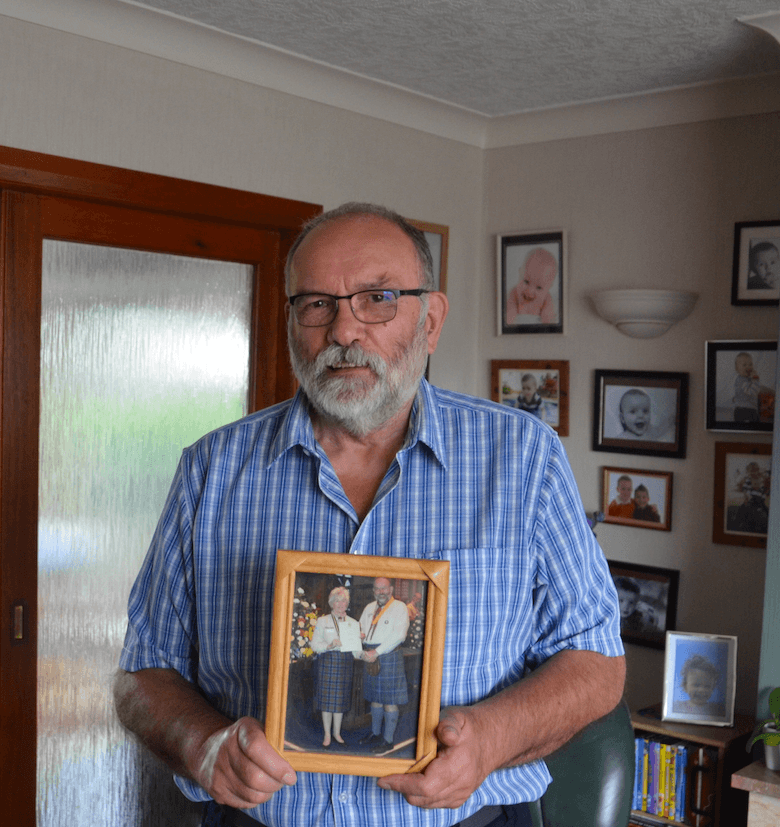
Legacy Story Library
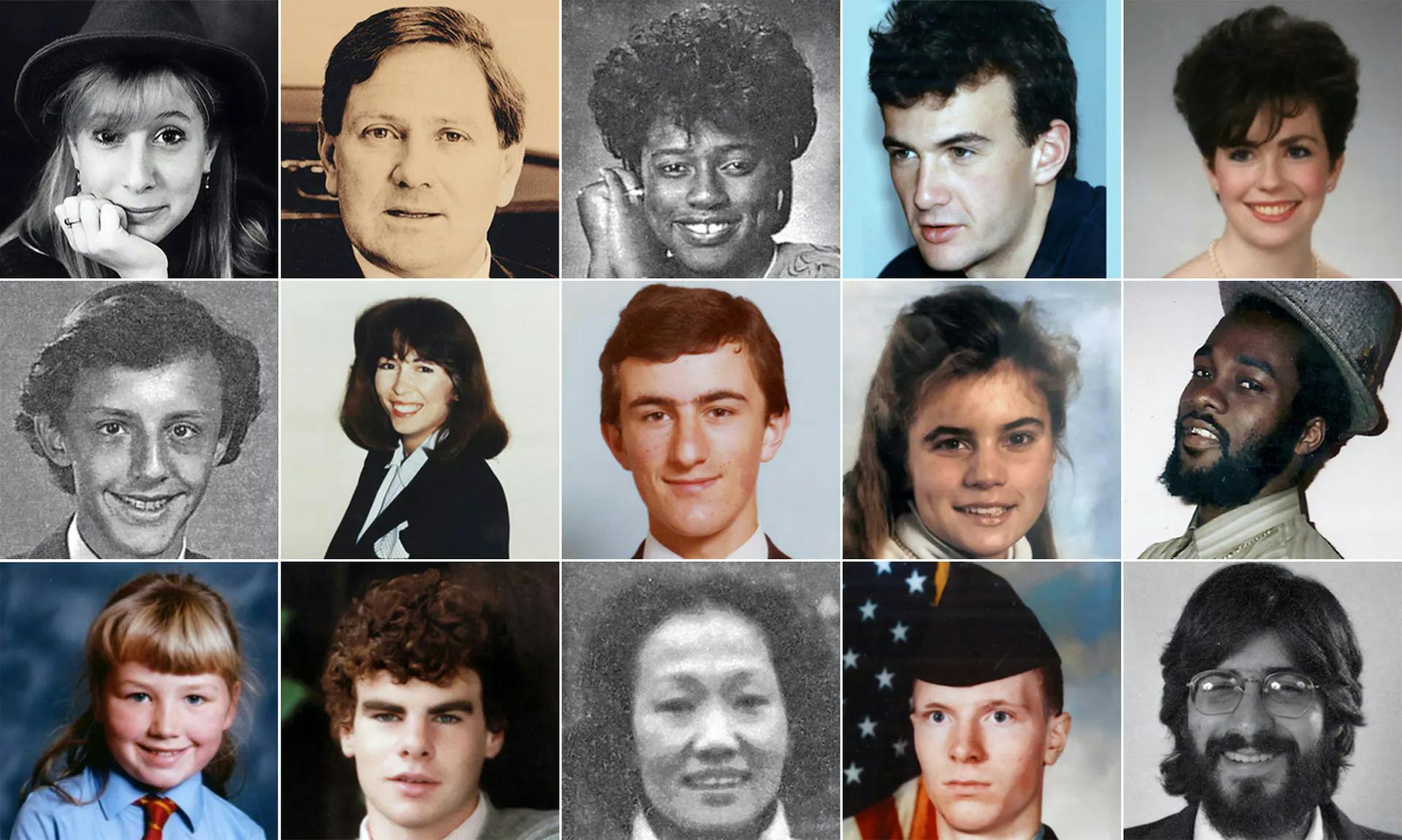
Living Memorial
Lockerbie: A Lesson in Humanity
Memorial Sites & Monuments
Pan Am Employees
Remembrance Programs & Publications
Syracuse University
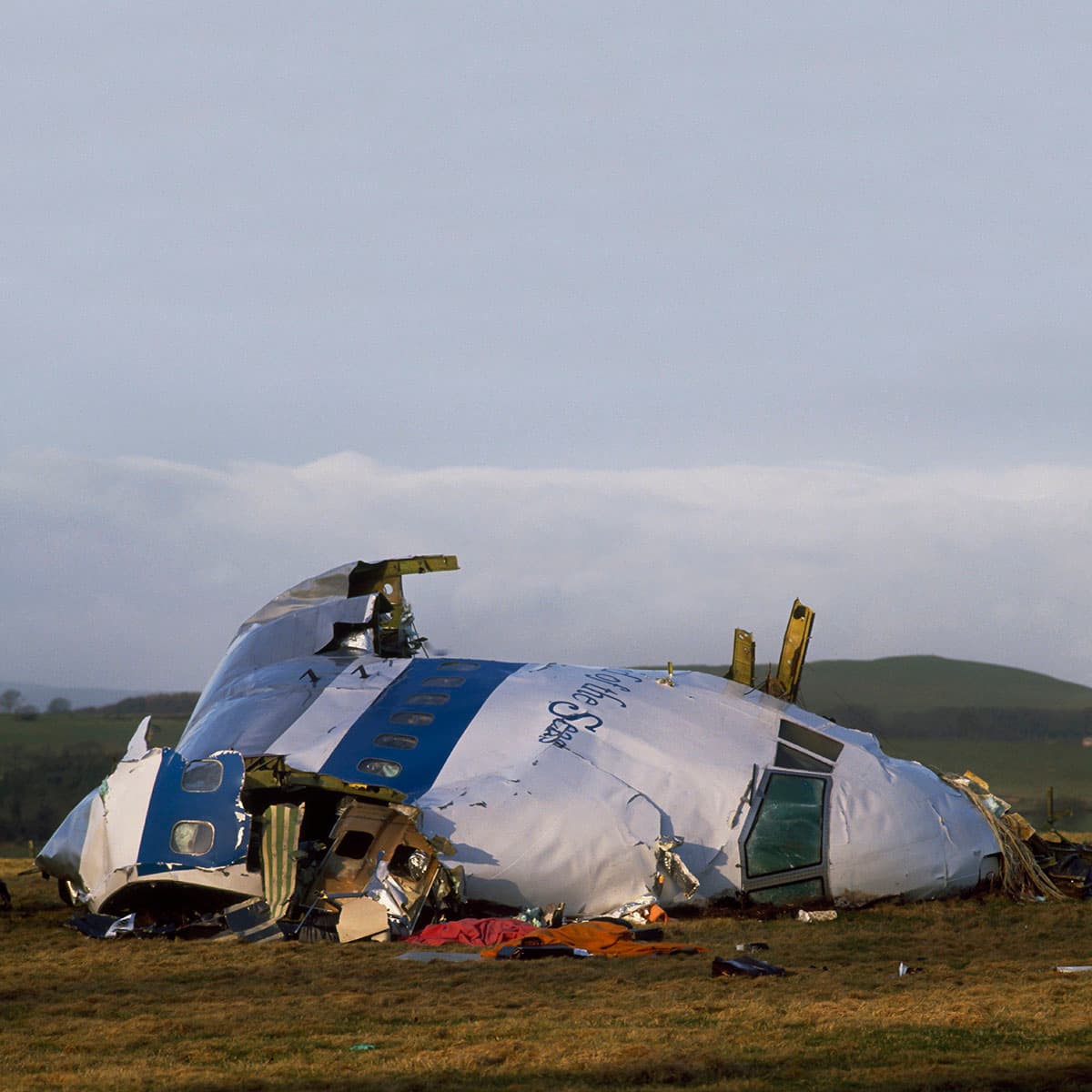
The Attack
Volunteer
Good Endures
We vigorously advocate the quest for truth about this terrorist attack against America and tangible justice for the 270 murdered victims.