
Richard Marquise
Richard A. Marquise is an expert in counterterrorism and crisis management. He is most well-known for his role in investigating the bombing of Pan Am Flight 103. Marquise worked for the Federal Bureau of Investigation (FBI) for over thirty years, including as chief of the Terrorist Research and Analytical Center (TRAC) at FBI Headquarters in the late 1980s. Marquise was involved in the investigation of the Pan Am Flight 103 bombing from its inception in 1988, led the inquiry through the return of indictments in 1991, and played an active role in the trial in the Netherlands in 2000. Following the resolution of the trial in 2001, he was awarded the Attorney General's Award for Distinguished Service. Marquise has given hundreds of speeches around the world on terrorism and wrote the authoritative book on the investigation, SCOTBOM: Evidence and the Lockerbie investigation.
- Justice and Accountability
"I'm Going to Stay Here as Long as It Takes": the FBI's Lead Investigator on Building the Case Against the Bombers

Introduction
12/21/1988-3/10/2026
Born in Durham, North Carolina, Richard A. Marquise, went to high school in Washington D.C. and studied English at St. Michaels college in Vermont. He followed in his FBI agent father’s footsteps, joining the FBI in 1971, aged just 23. From 1972 to 1979 he worked in the Minneapolis and Detroit Field Offices, specializing in counter intelligence and counter terrorism operations.
In 1986 he went to the criminal investigative division at the FBI’s headquarters in Washington D.C, where he was appointed chief of the Terrorist Research and Analytical Center (TRAC) and led a Middle-Eastern terrorism unit that managed FBI investigations worldwide. It was in this role that he first learned of the bombing of Pan Am Flight 103 and was tasked with leading the investigation.
The day of the attack
12/21/1988-6/12/2026
Richard was at work when he heard the news of the attack. There wasn’t a lot of information in the immediate aftermath. It took some days to establish that a bomb had gone off on Pan Am Flight 103 over Lockerbie and that there would need to be a criminal, and possibly a terrorism, investigation.
The days following the attack
12/22/1988-3/10/2026
The families of those on Pan Am Flight 103 were notified in the aftermath, but the FBI made the decision not to go out and knock on their doors to further pursue the investigation over Christmas. At the start of January 1989, Richard set up a task force and began the US investigation.
The investigation
1/2/1998-3/10/2026
The investigation was led by the police in Scotland. Initially, the FBI’s role was to help identify the passengers. But even in the early days, US officials were instrumental in many of the breakthroughs.
In this 2018 FBI documentary, Richard remembers that the magnitude of the crash didn’t really hit home to most American people, or even to the FBI. In order to get a full appreciation for what had happened, he says, you had to go to the crime scene.
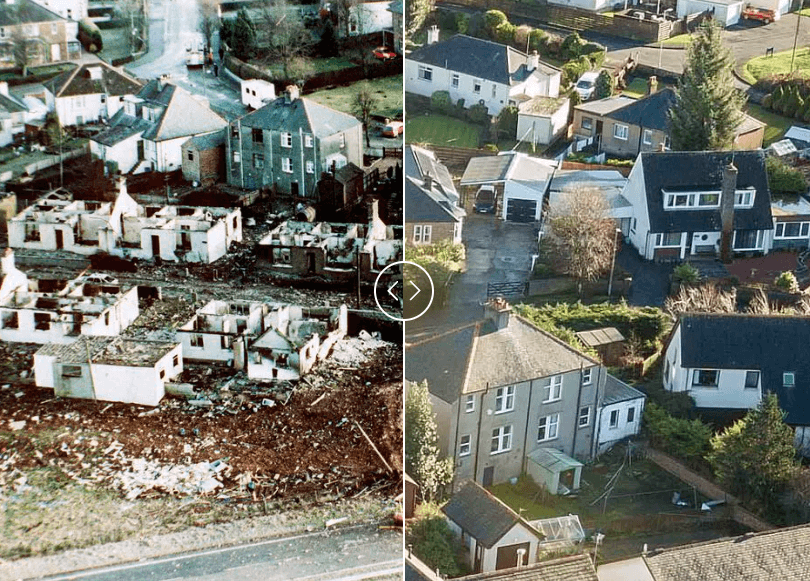
Richard worked solidly every day. He didn’t have a day off in three months, he says; so, he didn’t actually travel to Lockerbie until March 1989. It was the first time he had ever been to Europe. But the first time visiting the site has been imprinted in his mind ever since.
There was some initial tension between the FBI and the Scottish police as the collaboration between the international teams was being established, and there were often differences between the teams despite their common goal.
Richard admired the thoroughness of the Scottish police.
Although there were sometimes tensions between them, Richard came to greatly respect his international counterparts, as he recounts in the clip below from a 2018 FBI documentary.
In the interview below with NPR in 2022, he described the investigation as “the most significant crime scene and investigation in history up to that point,” involving dozens of countries and bringing police and intelligence agencies together in an unprecedented way. Even military personnel were brought in to assist the operation.


Military personnel spread out with evidence bags in the countryside around Lockerbie. (1988-1989 Syracuse University Archive.)
In the early days of the investigation, says Richard, there were a number of theories as to who had planned the attack. There were Palestinian groups that were angry because the US had aligned itself with Israel and Iranian groups angry that the US had aligned with Iraq in the Iran-Iraq war. In 1986, the US carried out air strikes against Libya, including Libyan leader Muammar Gaddafi’s residence in Bab al-Azizia. In July of 1988, a US Navy warship, USS Vincennes, shot down an Iran Air commercial plane, killing 290 people, claiming it misidentified the aircraft as a fighter jet.
There were a number of leads that investigators were following. The prime suspect in the early days was a group called the Popular Front for the Liberation of Palestine – General Command (PFLP-GC), which had a history of building explosive devices used on airplanes.
Along with the circuit board they found a minuscule component hidden in a small fragment of cloth found in the field, which was part of the bomb’s timer. Initially, the Scottish police insisted on holding on to this evidence. Eventually they agreed to let the FBI examine it, which led the investigators to Mebo, the Swiss electronics firm they believed had manufactured the timer, which in turn pointed to Libya rather than the PFLP-GC. The lack of joined-up thinking that stalled this identification was one of the factors that led Richard to write to his bosses urging a reset in relations with the other countries in the investigation.
In this new role, Richard was determined to build a collaboration with the senior investigating officer in Scotland, detective chief superintendent Stuart Henderson. In this audio clip, he discusses how he built a personal relationship with his Scottish counterpart.


Stuart Henderson and Richard Marquise in Henderson’s office at the Lockerbie Incident Control Centre, Lockerbie, Scotland, 1991.
Pieces of evidence were starting to come together, and a series of breakthroughs came from some of the clothing that had survived the blast, providing a series of leads that the investigators could follow up.
Around the same time, says Richard, the Bundeskriminalamt, the Federal Criminal Police Office of Germany, found a baggage record indicating that a lone bag had been transferred from an Air Malta Flight and taken to Frankfurt. Investigators believed it was then loaded onto Pan Am Flight 103. Suddenly, new lines of inquiry were opening up.
The purchaser of the tweed jacket was identified by Gauci as likely to be Abdelbaset al-Megrahi, a Libyan intelligence officer, who was also chief of security for Libyan Arab Airlines. Megrahi was known to Edwin Bollier, the founder of Mebo, the electronics firm investigators believed manufactured the bomb’s timer. Bollier told investigators Megrahi had set up a business at his company’s offices in Zurich.
Meanwhile, the investigation in Malta led to Lamen Khalifah Fhimah, a station manager for Libyan Arab Airlines. When his abandoned office was searched, investigators found evidence they believed linked Fhimah to Megrahi and the plot to blow up Pan Am Flight 103.


Flights connecting to Pan Am 103. (1988-1989 Syracuse University Archive.)
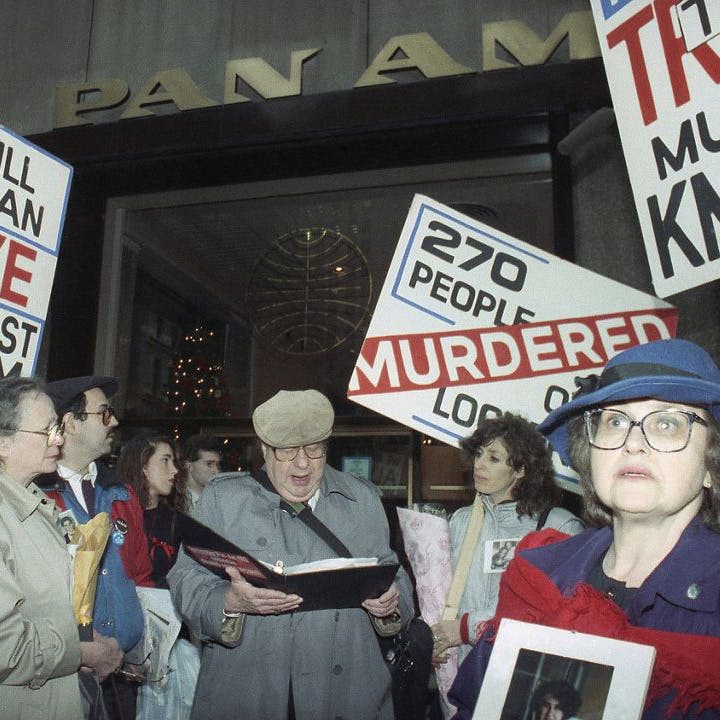
On November 13, 1991, US and British investigators indicted Abdelbaset al-Megrahi and Lamen Khalifa Fhimah on 270 counts of murder, conspiracy to murder and violating Britain's 1982 Aviation Security Act. In this audio clip, Richard remembers the moment the joint indictments were announced.


In December 1991, following the indictment of Abdelbaset al-Megrahi and Lamen Khalifa Fhimah in November, lead investigators from Sweden, Malta, Scotland, Switzerland, United States and Germany met in Scotland. L–R: Detective Superintendent Goran Arnfors from the Swedish Security Service (Säkerhetspolisen); Assistant Commissioner George Grech (Malta Police Force); Senior Investigating Officer (SIO) Stuart Henderson (Lothian and Borders Police); Inspector Hans Knauss (Swiss investigator); Special Agent in Charge Dick Marquise (FBI); Director Manfred Klink (Federal Criminal Police Office); Assistant Special Agent in Charge John Navarrete (FBI).
The trials
5/1/2000-3/10/2026
It would be nearly eight years later, following United Nations sanctions and protracted negotiations with Libyan leader Muammar Gaddafi, before Megrahi and Fhimah were handed over for trial at Camp Zeist in the Netherlands. The years between the indictments and the trial were extremely tough for the families of the victims, but also not easy for the investigators.
The trial began in May 2000, and both men denied murder. In January 2001, Megrahi was found guilty. After losing an appeal against his conviction, he was sentenced to at least 27 years in jail. Fhimah was acquitted. Megrahi’s conviction led in 2003 to an agreement with Libya to set up a $2.7 billion fund to pay compensation to the families of the bombing victims. Then, in 2009, following a decision by the Scottish Criminal Cases Review Commission that Megrahi should be granted a second appeal and a subsequent announcement that he had been diagnosed with prostate cancer, the Scottish government released him on compassionate grounds. Together with Stuart Henderson, Richard wrote to the Lord Advocate, Scotland’s chief law officer, to ask that Megrahi remain in jail.
Megrahi died in Tripoli, Libya, in 2012 as the only person to be convicted for the attack. However, in 2020, on the 32nd anniversary of the bombing, the US government announced it had filed charges against Abu Agila Mohammad Masud, thought by investigators to be the man who made the bomb that destroyed Pan Am 103 over Lockerbie, a charge he denied at a hearing in the US in February 2026.
The trial is significant, he told NPR in 2022, because it gives the families of the victims the chance to see the person who the government believes was responsible for killing their loved ones answering to a US court.
Alternate theories
3/10/2026-3/10/2026
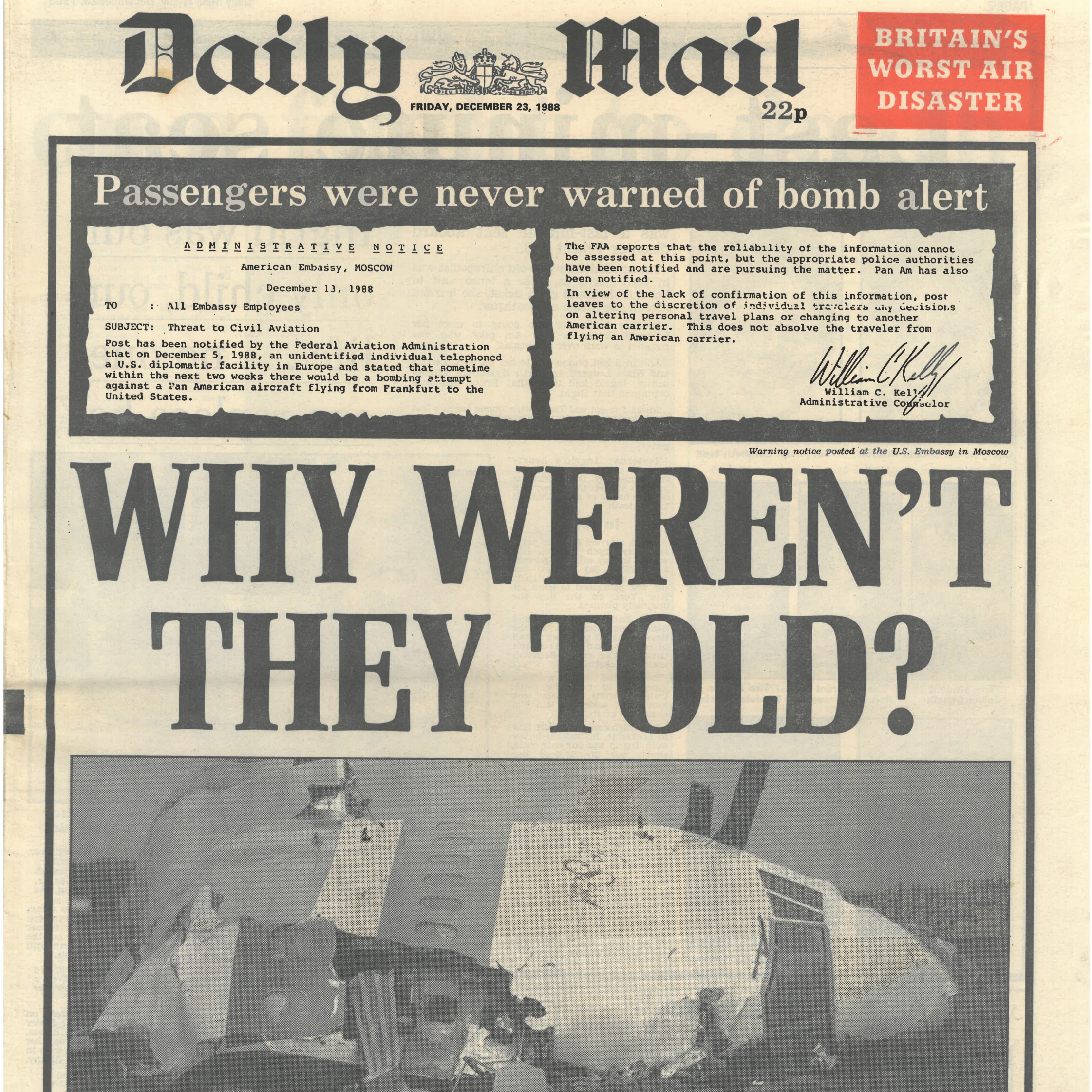
In the days and weeks following the attack, press reports speculated about passengers on the flight who may have been connected to the bombing while the investigation was focused on groups in Germany and Sweden, none of which proved to be conclusive. It also emerged that on December 5, 1988, 16 days before the attack, the US Federal Aviation Administration had issued a security bulletin warning that the US Embassy in Helsinki had received a call from a man with an Arabic accent who told them that a Pan Am flight from Frankfurt to the US would be blown up by someone associated with the Palestinian Abu Nidal Organization (ANO). Two years earlier, ANO had hijacked Pan Am Flight 73 in Karachi, India. The bulletin was sent to US diplomats but was not circulated more widely.
Many people remain convinced that Iran was behind the bombing, but Richard is not swayed by their reasoning.
Richard believes the evidence points clearly to Libya and that the people they indicted were the people responsible for the bomb plot.
The community that formed as a result of the attack
3/10/2026-3/10/2026
The investigation, unusually in his line of work, led Richard to get to know many of the families of the victims. He remembers those people involved with activism and advocacy warmly and attributes the things that were accomplished around Lockerbie to this diverse group.
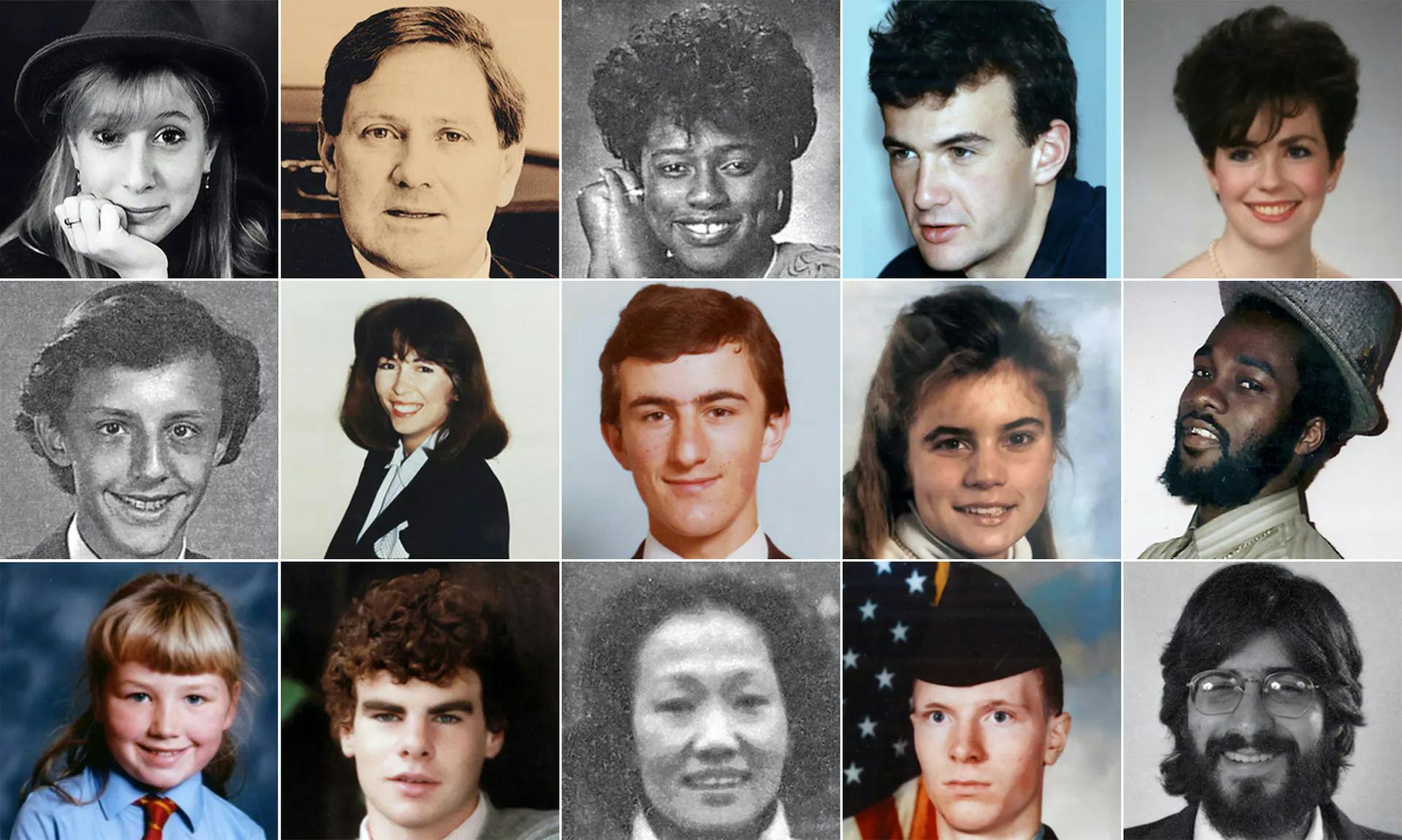
One of the family members that Richard was in contact with was Aphrodite Tsairis. She and her husband, Peter, founded the Alexia Foundation in 1991 in partnership with the Newhouse School at Syracuse University to honor their daughter, Alexia. Alexia was a photography major at Syracuse when she was killed in the bombing of Pan Am 103 as she was returning home from a semester abroad in London. She was 20 years old. In particular, Richard remembers the first time he spoke to the Lockerbie families and Aphrodite’s later response.
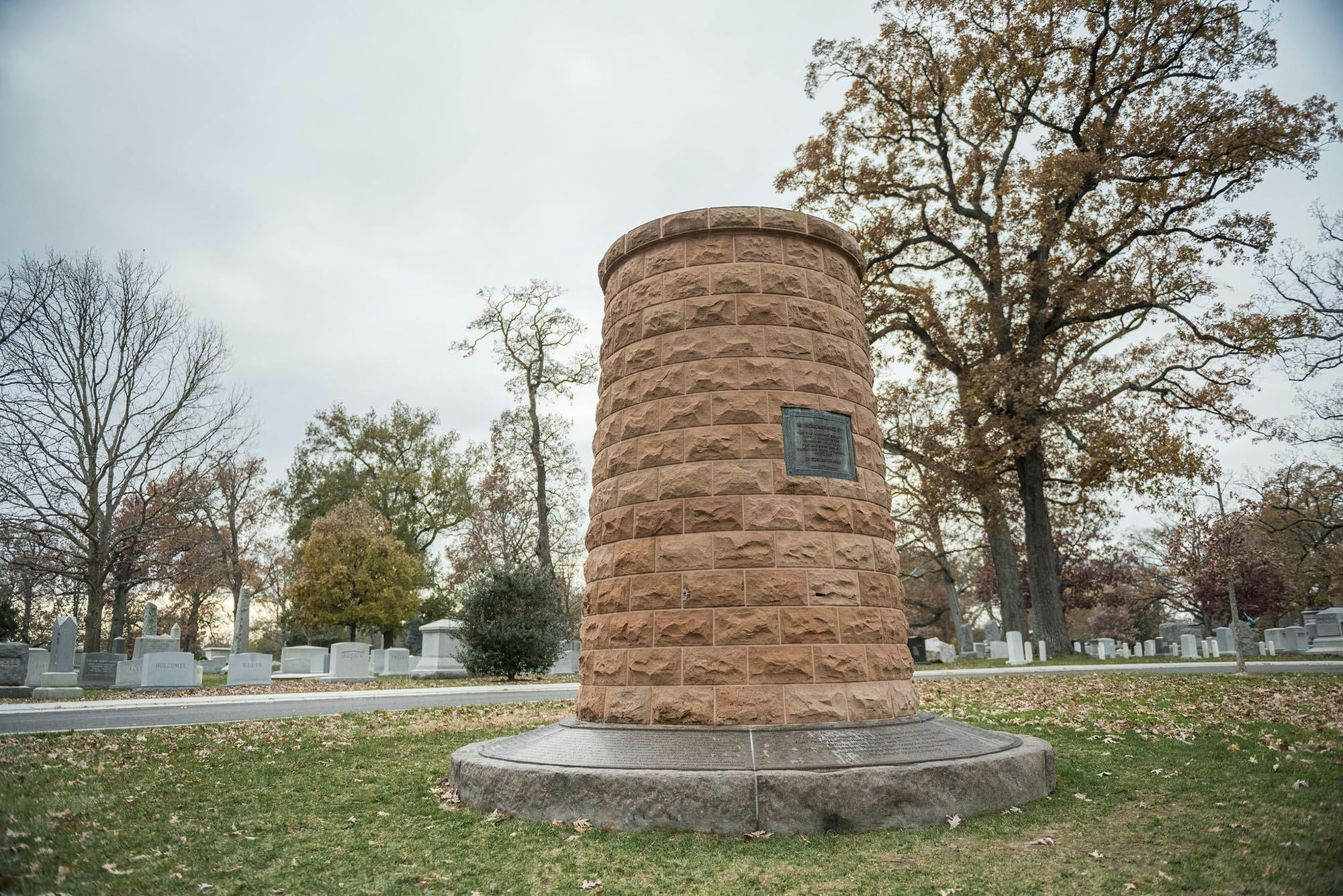
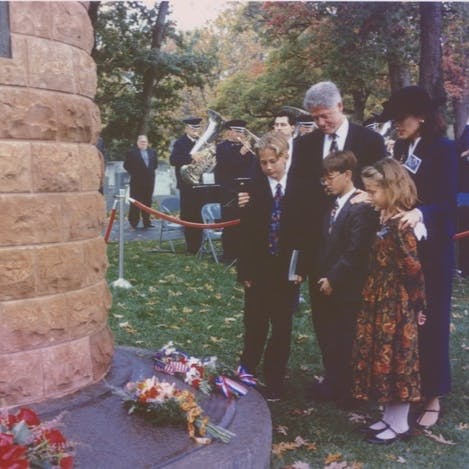
Richard retired in 2002 after a career of more than 31 years, but he is still in touch with many of the families of those who lost people, and he still goes to Arlington National Cemetery every year on December 21 to commemorate the victims of the bombing of Pan Am Flight 103.
Related Stories

My Friend Jewel

Dealing with Things That Have Haunted Me

Bringing Them Home from the Hills: Braemar Mountain Rescue Team and Grampian Police
Your story is our history
Share your unique story of how the December 21, 1988, terrorist attack affected your life. Preserve your memories and legacy while helping to create the most extensive digital library of personal stories about the Pan Am 103 attack.
Explore Further
Authors & Artists
Aviation Safety & Security
Community Partners
Flyers' Rights vs. Business as Usual
Historical Archives: Curated Collections
Justice & Accountability
Legacy Story Library
Living Memorial
Lockerbie: A Lesson in Humanity
Memorial Sites & Monuments
Pan Am Employees
Remembrance Programs & Publications
Syracuse University
The Attack
Volunteer
Good Endures
We vigorously advocate the quest for truth about this terrorist attack against America and tangible justice for the 270 murdered victims.